Does a firm massage really release muscle knots?
If you’ve ever had a sore neck, tight shoulders, stubborn lower back pain or insert any other niggly pain here… you’ve probably at some time or another thought to yourself:
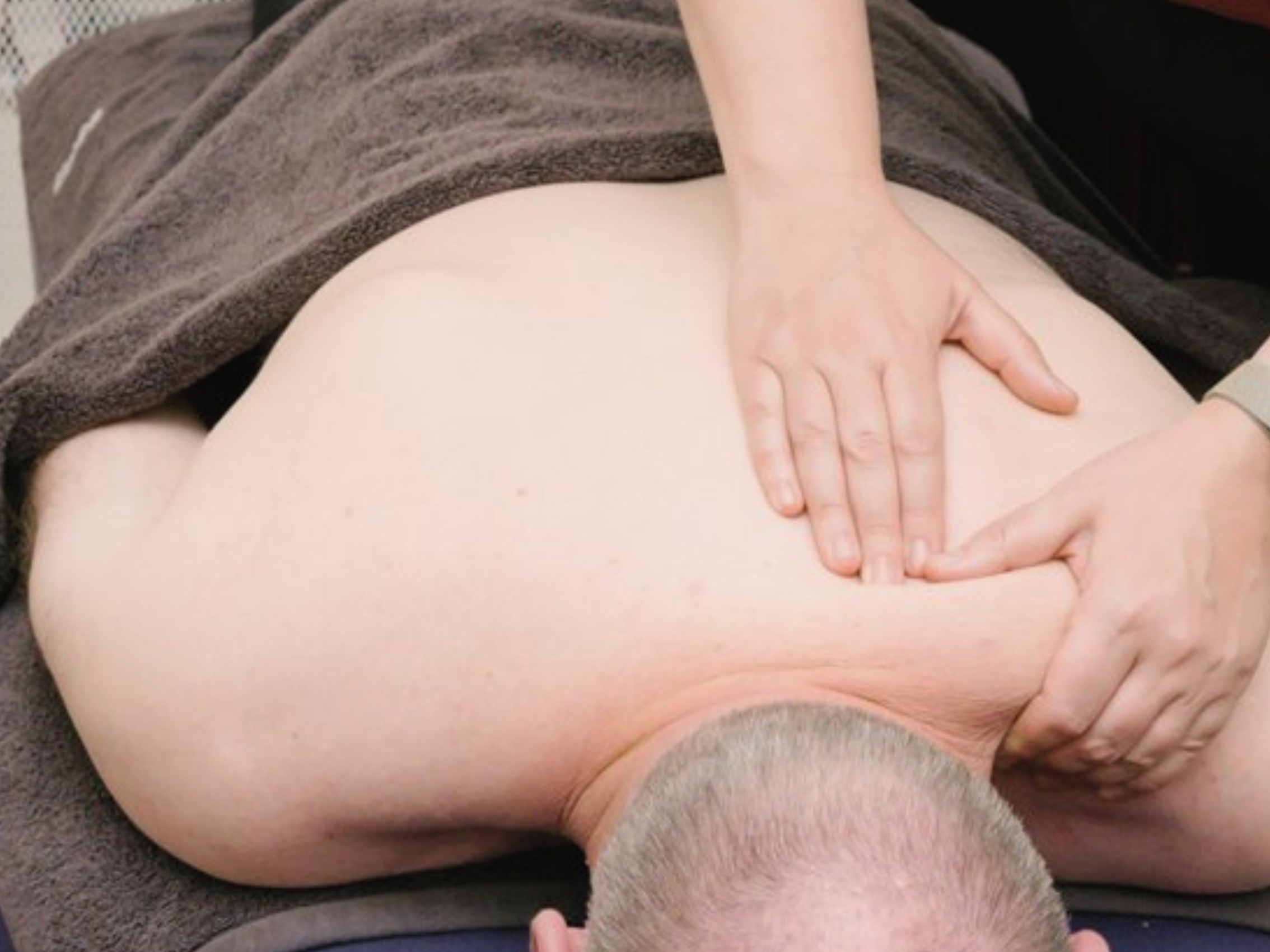
“I really need a massage to release these muscles” or;
“I need a good pummelling to get rid of these knots” or my personal favourite;
“I just need someone to get in there and massage it out”.
It’s a common way to describe what we’re feeling in our body. A spot feels tight, hard, tender or ropey. Someone presses on it. At first it feels sore, (but a good sore), then warm, then just like magic… looser. Suddenly it feels better and can move easier.
This mechanical understanding of the body, and belief about how massage and manual therapies work has been a long held and deeply ingrained in our psyche. Because it makes sense right? Our bodies are machines, muscles are what help move us around and sometimes our muscles get tight and we need them ‘released’. We need someone to apply physical pressure to ‘undo’ that tightness so that the muscle can work again….
The unfortunate truth is…. it’s not quite how it works. We are far more nuanced and complex than a machine, and this model to understand our bodies and our pain is now outdated.
The good news? Manual therapy treatment still works! It just works in a different way than the ol’ ‘breaking up the knots’ explanation suggests.
Are muscle knots actually knots?
When people talk about ‘knots’, they are usually describing areas that feel tight, tender, sensitive, dense or restricted.
That feeling is real.
But it does not mean that there is a literal knot in the muscle that needs to be physically untied. Your muscle fibres have not tangled themselves into a jumbled mess - much like my collection of necklaces in the bottom of my jewellery box has.
What we are feeling is typically due to increased sensitivity in the local tissues, protective muscle tone, local fatigue of the tissues, increased nervous system input, restricted movement and the nervous system directing your attention to the sore area.
In other words, a ‘knot’ is less like a physical lump that needs to be squashed out, and more like an area that is currently in state of protection, irritability or overload. The sensations you’re experiencing from that area are driven by the nervous system, rather than by the physical length or position of the tissue.
The modern understanding
We’ve come a long way since we first started describing manual therapy effects as causing mechanical changes in the tissues of the body.
Breaking up adhesions, lengthening fibres, massaging out tightness. These explanations while convenient, are no-longer considered realistic or evidence-informed.
Yes there are physical changes that occur at the tissue that is being touched, though we are not creating the structural changes that these old explanations would have us believe.
So why does massage feel good?
Massage, manual therapies and other ‘hand-on’ treatments provide a sensory input to the body.
Pressure, movement, touch, temperature, even vibration are all picked up by the receptors in the skin, muscles, fascia and joints. That information (the sensory input), travels from those tissues to the spinal cord and to the brain. From there, your spinal cord and your brain both initiate responses. Some of these are automatic and occur at the spinal cord (without input from the brain) and other responses are mediated by the brain - this means that various areas of the brain provide context, understanding and meaning to what is happening, and then makes a decision about how to respond.
The responses from brain and spinal cord can include:
Reduced pain sensitivity
Modulate muscle tone
Releasing ‘feel good’ chemicals
Changing blood flow and blood vessel size
Alter sensation
Alter how we perceive threat and how we perceive the ‘threat’ to the sore area
All of these responses help to create those nice feelings post treatment of being ‘loser’, having less pain and generally more mobile. Rather than forcing a structural change to the tissues, we’ve actually caused changes in the local chemical environment, in the spinal cord and in the brain.
Why a ‘firm’ massage doesn’t really mean ‘better’
Firm massage can feel great. Some people enjoy the sensation of strong pressure, and sometimes this is an appropriate input for the body.
But firmer doesn’t mean better. It’s not ‘necessary’ in order to create change and most importantly more pressure is not going to undo the ‘knots’.
If an area of the body is already sensitive, irritated, or on high alert, pushing harder is rarely a helpful option. In many cases, strong intense pressure will create more wind-up in the nervous system and cause more guarding, pain and protective tightening. We create the very response that we are seeking to change.
The ‘right’ pressure is not the deepest pressure you can tolerate.
It is the amount of input or stimulus that generates a desired response from your nervous system. Typically the desired response is a down-regulation of the nervous system, or more simply; your nervous system decides that the input is ‘safe’, and that your body can relax.
Many people can report that treatment can feel tender or uncomfortable at times. This is normal, it should always still feel ‘tolerable’. You should still be able to breathe, and consciously encourage your nervous system to relax in those moments. Pressure for the sake of ‘feeling it hurt’ is rarely useful, and treatment that is ultimately too uncomfortable to tolerate is very often counterproductive.
Pain is not the goal. Nervous system change is the goal.
What is Myotherapy actually doing?
Myotherapy is not about finding tight spots and pressing on them. It’s not just about pushing joints back into place. And it’s definitely not about breaking up adhesions or knots.
A good treatment considers why an area is feeling tight, sore or protective in the first place. This might involve looking at movement, strength, training load, work habits, stress, sleep, diet, recovery, injury history and more. It’s about seeking to understand the context.
Hands-on treatment can be one part of the Myotherapy treatment process. It can help reduce pain, change sensation, improve movement, and importantly help you to feel more comfortable and capable in your body. Once that occurs, a window of opportunity opens for other inputs (like exercise and strengthening) to support your body to become more adaptable, confident and resilient.
Why the explanation matters
You might be wondering… does it really matter how we explain treatment? If massaging a tight spot helps, does it matter whether we say it ‘released a knot’?
I think it does.
Words are powerful. The words we use to talk to and about our bodies matter. They can change how we think, feel and perceive our world.
If you are told that your muscles are full of knots, adhesions or stuck tissues that need to be broken down, it can make your body sound fragile, faulty or ‘at risk’. It also creates the impression that you need someone to ‘fix’ you.
A more helpful explanation is:
Your body is adaptable.
Your nervous system is responsive.
Pain and tightness are controlled by the nervous system and can change.
Treatment can help create an opportunity for change.
Movement, strength, recovery and confidence help make those changes more long term.
People often report feeling ‘released’ after a treatment. And it describes the feeling well. But rather than thinking of release as being a muscle being mechanically un-tied, it is more helpful to think of it as a change in your nervous system.
Your brain feels ‘safer’, your muscles reduce their protective tone, your pain sensitivity lowers, your movement feels easier, and you feel more confident using that part of your body.
This is all a meaningful and desired change. It just doesn’t require the idea that your muscles have been forcibly broken up by someone’s thumb, elbow or forearm.
If you are dealing with recurring tightness, pain or that ‘knotty’ feeling, myotherapy can help you understand what is contributing to it and what to do next. Book an appointment at Melbourne Performance Therapy for evidence-informed myotherapy in Brunswick.